Whether you’re embarking on a kitchen remodel, a new floor, or a piece of new furniture, you’ll encounter engineered wood sooner or later. What is engineered wood and is it as good as solid timber is something that many buyers ask. Well, for one, it is one of the commonly used materials that are practically used but for not every job.
This guide will fill you in on the plain knowledge of engineered wood. You’ll find out how it’s created, the primary types, the advantages and disadvantages, and how to select the best one for your project.
What is Engineered Wood?
Engineered wood – wood product that consists of wood strands, fibers, particles, veneers or boards bonded together with adhesive. Makers join numerous smaller pieces together to create a solid, even panel or beam, rather than cutting one out of a tree.
It is sometimes referred to as composite wood, manufactured wood or man-made wood. The names convey the same meaning. The basic material is real wood and it is transformed into a new product using glue, heat and pressure.
So, what is engineered wood in everyday life? It is used to make most kitchen cabinets, flat packs furniture, sub floors and many hardwood floor imitations. You can also read This Old House for additional expert advice.
Engineered Wood: Made How?
The steps are similar, but the process varies depending on the product.
Logs, branches, and wood residues are debarked and then cut into veneers, strands, chips or fibers.
Moisture is controlled by drying the pieces.
The pieces are glued together with an adhesive, which may be a resin.
The pieces are stacked or molded together to create a mat.
When everything is pressed down under heat and pressure it forms a solid sheet or beam.
Product is sliced, sanded and graded for sale.
Smaller pieces allow for manufacturers to use the wood more efficiently. Sawmill waste can be transformed to useable boards.
Main Types of Engineered Wood
Once you have heard what engineered wood is, let’s take a look at some of the types you’ll encounter most frequently.
Plywood
Plywood is a thin wood veneer which is glued together in layers. The grain of each layer is oriented perpendicular to the grain of the other layers. This cross-grain pattern provides resistance against splitting and strength to the sheet. It’s widely used in walls, roofs, floors, furniture and cabinets.
Medium-Density Fiberboard (MDF)
MDF is created with fine wood fibers, mixed with wax and resin and subject to heat during pressing. The surface of it is smooth and no grain show, it is a good base for painted cabinet doors and moldings. May swell when wet; avoid getting wet.
Particleboard
Particleboard is made from wood chips and sawdust that are bonded together with resin. One of the cheapest and typically covered in laminate or veneer. It can be found on budget furniture and shelving. Does not tolerate moisture.
Oriented Strand Board (OSB)
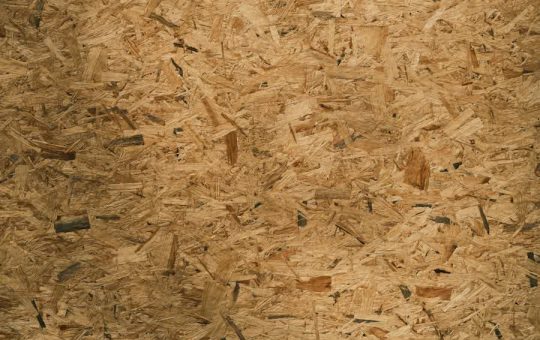
OSB comprises a stack of rectangular wood elements, each oriented in a different direction and bonded together with an adhesive. It is used widely in house construction as wall sheathing, roof decking and subfloor.
Laminated Veneer Lumber (LVL)
LVL consists of a series of thin veneers glued so that the grain is all in the same direction. Produces good, straight beams and headers, which support loads in buildings.
Glued Laminated Timber (Glulam)
Glulam is made by gluing layers of lumber together, with the grain running along the length. It can be made into large beams and curved domes, and is used in open plan houses, bridges and halls.
Cross-Laminated Timber (CLT)
CLT arranges boards to form layers that are perpendicular to one another and glues them together to make a large solid panel. In mass timber buildings, builders are relying on CLT as the building enclosures, walls, and floors.
Engineered Hardwood Flooring
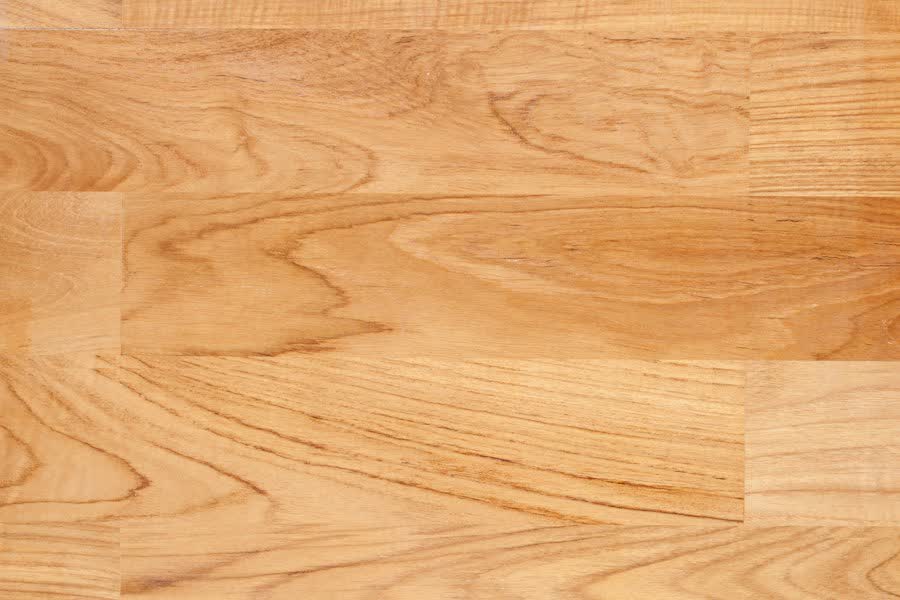
This flooring is made up of a real hardwood overlay on a plywood or fiberboard subfloor. Although it appears to be solid wood, the core has layers of wood that are more resistant to fluctuations in humidity.
Engineered Wood vs Solid Wood
It helps to understand what engineered wood is, if you compare it to solid wood. Solid wood is manufactured using one piece of wood. Engineered wood is made up of many pieces.
Solid wood is made from the natural grain and can be sanded and refinished numerous times. It can be passed down for generations if well taken care of. It can, however, grow, shrink and warp with changes in humidity. It also comes at a higher price – particularly for rare species and wide boards.
Engineered wood is typically more stable, large even sheets are available and the price is generally lower. However, it may be more difficult to repair and some varieties are not water tolerant.
Both materials do not necessarily work in every scenario. This depends on the place you will be using it in and how long you require it.
Pros of Engineered Wood
When you learn what engineered wood is, you’ll begin to understand why it is so popular among builders and makers today. These are the main benefits.
Stability: Layers and crossed grain minimise warping, shrinking and twisting in comparison with many solid boards.
Lower cost: Most engineered products will be cheaper than solid hardwood products of the same size.
Large sizes: Makers are able to produce wide sheets and long beams, which are difficult to cut from one tree.
Consistency: Panels are even and have fewer knots and flaws.
Wood use efficiencies: Smaller trees and wood residues can be utilized to create valuable products.
High variety of finishes: The option of veneer, laminate or paint can provide a variety of looks.
Load-bearing strength: Products such as LVL, glulam and CLT are engineered for load-bearing applications.
Cons of Engineered Wood
There are limitations to engineered wood, too, so it’s wise to be aware of them before purchasing.
Moisture risk: Particleboard and MDF will swell and crumble if exposed to moisture. Even products for damp places require sealed edges.
Limited refinishing: Engineered flooring is available that has a thin top layer; this type of flooring can be sanded only a few times, depending on the thickness of the layer.
Formaldehyde is emitted by some resins (adhesive emissions). Search for low-emission product marks, including CARB Phase 2 or TSCA Title VI in the U.S., or E1 in Europe.
Heavy in size: MDF and particleboard.
Reduced screw strength: If the particleboard or MDF is struck with many screws, they can lose grip, particularly at edges.
Asymmetric quality: There are differences in quality of panels and glue; brand and grade are important.
Common Uses of Engineered Wood
Engineered wood can be found virtually everywhere in homes and buildings.
Kitchen and bathroom cabinets and walls.
Wardrobes, desks and shelves
Flooring and subfloors
Wall sheathing and roof decking.
The doors, panelling and moulding have been replaced.
Beams, headers and timber frames.
To put it simply, what are the uses of engineered wood? It can be applied in many places where large quantities of stable and uniform wood are required at low costs.
How to Select the Perfect Engineered Wood
You’ll be able to make that choice with the help of some simple questions.
Where will it go? In bathrooms and kitchens, use products that are moisture resistant to plywood or well sealed. Store MDF and particle board in dry areas.
Is it heavy or not? Use LVL, glulam, CLT, and structural plywood and OSB for structure, and adhere to local building codes.
How should it look? Choose veneer or laminate to achieve a wood appearance or MDF to achieve a smooth painted surface.
How much do you have to spend? Particleboard costs least. Engineered hardwood and plywood are more expensive, but can last longer.
Is it low-emission? Look on the label and ask the seller for formaldehyde certification.
Knowing what engineered wood is and how each type will react to the job becomes easy.
Simple Care Tips
Properly cared-for engineered wood products will endure longer.
Wipe spills quickly. The number 1 enemy of most engineered woods is standing water.
Seal cut edges, screw holes, particularly in kitchens and bathrooms.
Use a slightly damp cloth to clean floors, rather than a wet mop.
Place felt under legs of furniture.
If possible, maintain indoor humidity at a constant level.
Related reading: hardwood vs softwood furniture, simple wooden bookshelf, easy woodworking projects.
Final Thoughts
So, what is engineered wood? Real wood, manipulated into stable, affordable and flexible products including structural beams and sheets of plywood.
It has high advantages of low price, stable performance and wood utilization. It can be damaged by moisture, is difficult to repair and poor quality in lower priced items.
You now know what engineered wood is, and how the primary types vary. Use the appropriate material in the right room, inspect the quality label and keep it dry. When used correctly, engineered wood can be a great building material for your home for many years.
FAQs
What is Engineered Wood Made Of?
Engineered wood is constructed from actual wood pieces including veneers, strands, chips or fibers, using wood glue. The last board or beam is created by heat and pressure.
Is Engineered Wood “Real Wood”?
Indeed it has wood in it but isn’t a block of wood. Other products, like engineered hardwood, even feature a true hardwood surface.
So, is Engineered Wood Superior To Solid Wood?
Not always. More stable, and frequently less expensive; solid wood is much more easily refinished and repaired. Which one is preferable depends on the task or job.
Does Engineered Wood repel water?
No. Exterior grade plywood is one product that comes with glue resistant to moisture, but no engineered wood should be placed in standing water. Early sealing of edge and leak sealing will save it.
How long will Engineered Wood last?
It is dependent of moisture it gets, type and quality of it. Careful use of good engineered floor can provide many years of service life, as compared to inexpensive particle board furniture which tends to fail earlier.