You may have come across the letters MDF on a label in your furniture, shelving or cabinet shopping. On many occasions, buyers will stop and ask, “what is MDF wood, and is it any good?”. The truthful response is, it’s a very useful material, however, it’s only useful when it is used on the proper place.
This guide reviews the production of MDF, its strengths and weaknesses. You will also learn how it compares to plywood and solid wood, to make an informed decision.
What Is MDF Wood?
MDF is a medium-density fiberboard. It is an engineered wood product, i.e. it is not directly cut off a tree, but rather manufactured in a factory.
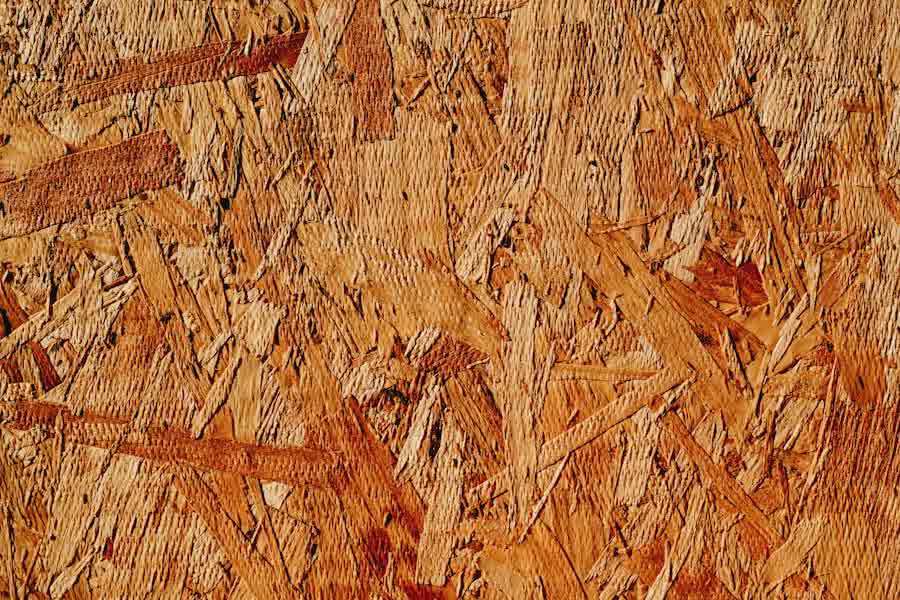
So, what does MDF wood mean in simple words? It is a flat board pressed together under heat and pressure from the fine wood fibers, wax and resin glue. It makes the resulting sheet smooth, dense, and grainless and knot-free.
The flat surface is the most important factor that makes MDF suitable for furniture, cabinet doors and trim.
How MDF Wood Is Made
An understanding of what the MDF wood is like in the factory explains how the board behaves. The basic steps of most factories:
Leftover wood from sawmills or wood chips are cleaned and softened using steam.
A machine is used to transform the chips into fine fibers.
The fibers are dried followed by addition of resin and wax.
The mixture is compressed into a mat and then subjected to heat and pressure.
Board is then cut and sanded down.
Due to the minute size and even distribution of the fibers, the board is uniform all the way around. This is also the reason for its clean cutting and routing. For more practical guidance on this topic, see Bob Vila.
MDF can be re-used material that may have been discarded by sawmill residues and offcuts.
Key Features of MDF Boards
How is MDF wood used? There are four distinguishing characteristics.
Smooth and Even Surface
The surface of MDF boards is smooth and devoid of grain. The application of paint, primer and veneer is uniform, yielding a neat application.
Easy to Cut and Shape
MDF can be easily sawn, drilled and routed into curves and detailed profiles. Does not split along a grain line like some solid wood.
Stable: Even throughout its width.
Solid wood contracts and expands during the seasons and has a tendency to crack and warp. MDF is more stable with respect to this. But it becomes swollen when it is soaked with water.
Dense and Heavy
There is a lot of weight to the full sheet of MDF. Move large panels in pairs and provide heavy panels with strong support on shelves.
Common Types of MDF
All boards are not created equal. Prior to purchase, find out what type you’re receiving:
Standard MDF – as used in all types of indoor furniture, panels and crafts.
Moisture-resistant MDF: treated to be more resistant to humidity. It is not waterproof and it is suitable for kitchens and bathrooms.
Fire Retarded MDF: for areas where it is important that MDF has a fire rating, such as in some interior commercial applications.
Lightweight MDF: does not have as much density, making it easier to carry but not as strong.
Low-emission MDF: produced using low formaldehyde releasing resin.
Advantages of MDF Wood
What are the uses of MDF wood? The reasons for its popularity are the following strengths:
Easy to obtain: it is often cheaper than solid hardwoods, and many grades of plywood.
Consistent: No knots, gaps or changes in grain to deal with.
Paint friendly: provides smooth bottom for painted finishes.
Easy to machine: cuts, drills and routs with clean results.
Easy to find: It is available in many thicknesses and sheet sizes and can be found in most stores that sell wood and hardware.
Disadvantages of MDF Wood
What is MDF wood bad at? Understand these boundaries ahead of time:
Not very water resistant: normal MDF will expand and deteriorate when it gets wet.
Insufficient holding of the edge (screws tend to split the edge or come out – pilot holes should be used).
Heavy: large panels are cumbersome to lift and install.
Fine dust: dust is generated when cutting and sanding should not be inhaled.
Formaldehyde: Many boards contain resins that can emit it; make sure to select boards that have been tested and certified for low emissions.
Difficult to repair: edges that are swollen, and deep dents are not easily repaired.
When to Use MDF Wood?
MDF is best suited to indoor, dry, applications and applications where a smooth surface is important.
Where can you use MDF wood?
Enjoy cabinet doors and drawer fronts that are painted.
Wall panels and fancy mouldings
Apply baseboard and interior trim.Install baseboard and interior trim.
Flat-pack furniture and furniture panels.
Speaker cabinets, in which it works to dampen vibration due to its density,
Interior light shelves and light loads.
A foundation for wood that is attached onto the top of it
Create works of craft, templates and workshop jigs
Where is MDF Not Recommended?
If conditions are challenging, skip MDF:
Outside: There will be rain and humidity that will destroy regular boards.
Wet areas, where no seal is provided: bathrooms and cabinets beneath leaking sinks.
Heavy books on long shelves: MDF will sag with time under a steady load.
Frequently-screwed and unscrewed parts: their fixing points become worn.
Projects requiring real wood: MDF is not available.
MDF vs Plywood vs Solid Wood
What are MDF wood’s two major competitors? Let’s take a quick glance.
MDF vs Plywood
Plywood is constructed with thin layers of wood glued together with the wood grain direction changing from one layer to the next. Typically stronger, better at holding the screws and is more resilient to moisture than regular MDF. MDF is however, smoother faced with no hidden gaps, and paints better. Use plywood for structure and MDF to smooth painted surfaces.
MDF vs Solid Wood
Solid wood is strong, natural and can be sanded and refinished multiple times. It is more expensive and humid. MDF is inexpensive, flat, and cannot be refinished as well as other wood, and is not very resistant to stress or damp.
Tips for Working With MDF
If you know the contents of MDF wood, you will know how to treat it. These habits help:
Use dust mask and safety glasses when cutting/sanding.
Always use sharp blades as dull ones can burn and chip the board.
Use pilot holes when installing screws.
Seal around the edges, they absorb paint and water more quickly than face areas.
Use a quality primer for the top coat.
Keep flat and dry to avoid bending.
How to Choose Good MDF
If you have learned what is MDF wood and how it differs, then take a closer look at the board before you pay. Check for even thickness, smooth edges and no chipped corners. Do not use sheets that are water damaged or have raised edges.
Always read the label to determine the board and, if present, the emission rating. In humid areas such as kitchens, bathrooms, etc., use a moisture-resistant grade and seal all the cut edges.
Related reading: hardwood vs softwood furniture, simple wooden bookshelf, easy woodworking projects.
Final Thoughts
In conclusion, what is MDF wood? It is a budget-friendly, smooth and even board, which will reflect light inside, in dry areas, and after painting. It’s not suitable for all jobs as a replacement of solid wood or plywood.
Use MDF for cabinet doors, cabinet trim, panels and speaker boxes. Do not use outside, in damp conditions or when heavily loaded. The right board will always be chosen by remembering what is strongest in MDF wood, which is smooth, painted, and indoor work.
Adjust the board to the task, close the edges and prevent dust exposure. Then, MDF will provide you with clean results at a reasonable cost.
FAQs
What is mdf wood?
MDF (Medium-Density Fibreboard) is an engineered wood product made by compressing wood fibres, resin, and wax under high temperature and pressure.
What is the material used to make MDF wood?
MDF consists of fine wood fibres, wax and resin. It is compressed and heated into sheets.
Is MDF Waterproof wood?
No. Standard MDF will take up water and expand. Moisture resistant variants are more tolerant to moist air, but require sealing and should not be left in water.
Which is sturdier: MDF or plywood?
Usually not. Plywood often is stronger and a better conductor of screws. Due to its density and smoothness, MDF is suited for cut-outs and painted surfaces.
Do you need to paint MDF wood?
Yes. Primer and seal the edges, as they absorb more paint than the face. A middle-of-the-range sanding between coats will produce the smoothest finish.
Would it be safe for use at a home?
Once installed, it is generally safe, particularly when using a low emission board and painting or sealing it. Use a mask when you are cutting – dust is fine.