It can be difficult to start a new crafts. Tools have been prepared, there’s various kinds of wood, and there are a lot of tips on the web.
It’s good news now. Woodworking for Beginners does not require a lot of tools and a large shop. Needs a couple of quality tools, the right kind of wood and practice.
Here are some tips for getting started! You will discover the tools you should purchase, easiest wood to work with, and the skills you will need. Finally you’ll be able to begin planning your first project.
What is Woodworking and why begin it?
Woodworking is a craft that deals with the creation of objects from wood. It might be the cutting board, a shelf, a small table or even a furniture.
It has practical applications and is rewarding, and lots of people enjoy it as such. You start with a blank board and end up with a product that you’ve created.
You’ll also get woodworking for beginners! You develop application of measurement skills, problem planning and problem solving. You will be able to use the same skills for home repairs and all of the other things you are able to do at home.
They’re not particularly large either! Small projects can be established in a corner of a garage, balcony or strong table.
Practical and compact book on choosing the best woodworking hand tools
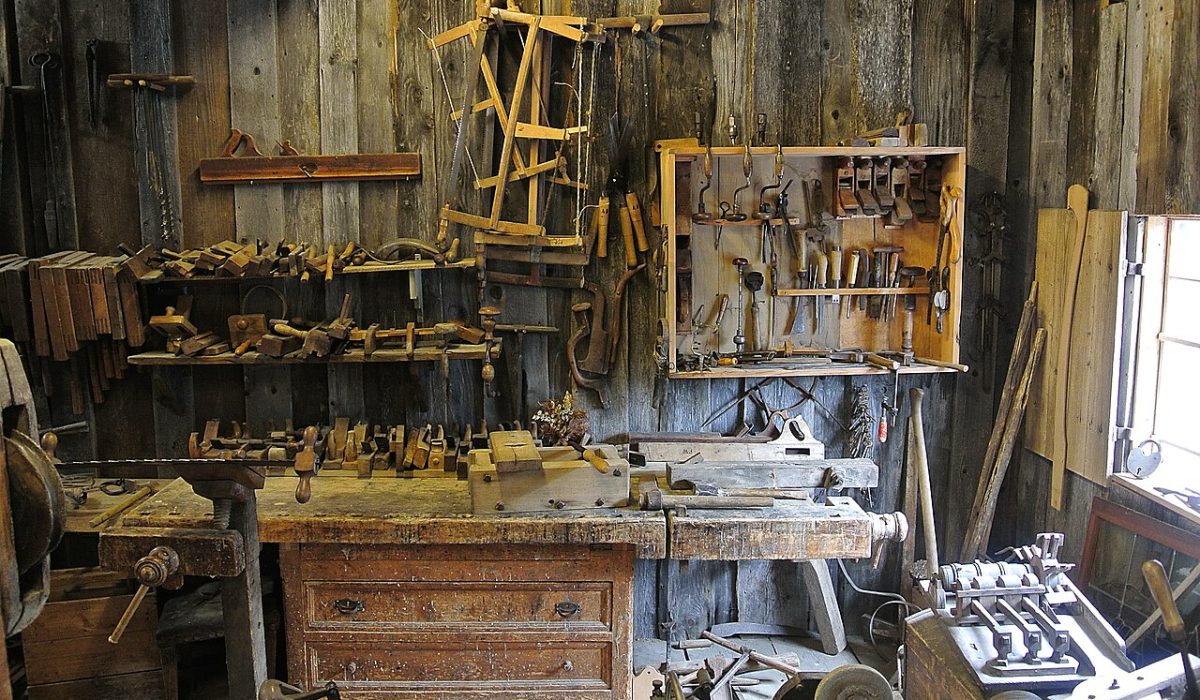
Hand tools will be less expensive, less noisy and will be a good method for teaching basic skills. These are just the basics as a starting point.
Use Of Measuring & Marking Equipment.Use of measuring and marking tools.
Good work is created by well made marks.
Ruler or tape measure: Measure lengths and widths.
Combination square: Use to make straight lines and verify 90 degree angles.
Pencil/Marking knife – A sharp line can be made by a pencil marking knife as it will give a cleaner cut.
It is regarded as a cutting and shaping equipment.
Handsaw: A pull saw is a saw which is easy to control for new users.
Coping saw: It is used for cutting curves and tight shapes.
Chisels: Small Set are designed for cleaning up joints and cutting edges.
Block plane: a plane for smoothing edges and small pieces of wood.
Screws, bolts, nails, etc. used to secure and retain components.Apparatus used to hold and secure parts.Parts holding/fixing tools.
Glue guns: Adhesive guns to put pieces together. Use at least two.
Basic Assembly: Hammer and screwdrivers.
Drill: Any type of hand or cordless drill can be used.
Purchase less, higher quality equipment. A good instrument trumps a bunch of crappy instruments.
A Power Tools that DO GROW!
Numerous projects can be done with only hand tools. But, there are a few power tools that can save some time and effort.
Cordless Drill/Driver: Holes and screws drilling at a high speed.
Jigsaw or circular saw: Makes curves. Using a circular saw for cutting straight cuts in boards and plywood.
Random orbital sander: This will significantly reduce sanding time and help to produce a smoother surface.
If you’re just starting out in wood working, add a power tool at a time. Only purchase when necessary for a project.
Table saws and routers are helpful in certain situations, but are more dangerous. Always educate yourself on the basics prior to application, and sometimes before even enrolling in a class.
A workspace for beginners to use
A secure work surface is the most crucial component of your area. Wood will not move while working on it if it is on a solid table or work bench.
Have adequate light to read your marks. Fresh air is also a necessity particularly for sanding/ finishing operations.
Ensure that tools are not in the way of others. Clean work areas are more productive, and safer to move around in.
The best materials for woodworking for beginners
The easier you have a timber, the easier the learning. Some tips before you go shopping.
Softwood vs. Hardwood
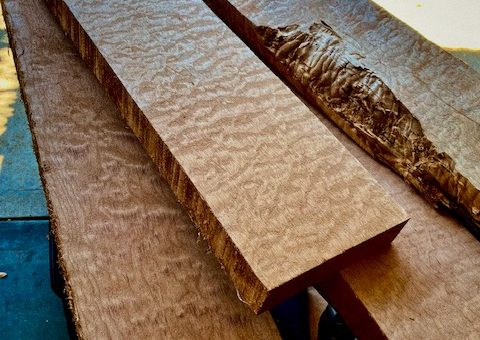
Softwoods are produced by conifer trees, such as pine, fir and cedar. These can often be cut at a lower price and in a simpler fashion and are thus widely used for common practice.
Oak, maple, walnut and cherry are examples of broadleaf trees from which come hardwoods. These are more tough and typically stronger, but are more costly and less malleable.
The name is not used as a reference to hardness, but to type of tree. Poplar is a hardwood, but relatively soft and easy to cut. Either pine or poplar can be used as a good starting species.
Plywood and MDF
Plywood is a thin piece of wood that is glued together to create a thicker piece of wood. It remains flat and functions in the areas of shelves, cabinets and boxes.
MDF is manufactured with wood fibres and resin. Smooth and inexpensive but heavy and bulky when wet. It also generates extremely fine dust, so please avoid cutting and sanding, as well as wearing a mask.
Knowing the length, width and height of timber
Lumber labels might not always be accurate. The actual size of 2×4 is about 1.5″ by 3.5″. When cutting, it’s always best to check the actual size first.
Glue, screw and finish the artwork.
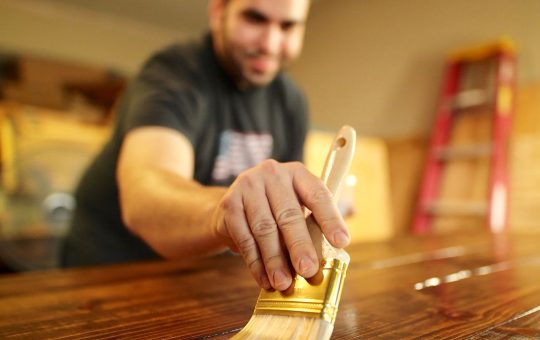
Most projects will require wood glue, screws, sandpaper and finish. Common finishes are oil, wax and polyurethane. Test a sample on a scrap.
The skills that every starter needs to know
Tools are important but so are the skills! These are the basic woodworking skills that every woodworker should learn.
Collaborating to create and apply accurate measurements and markings accurately.
The age old rule of “measure twice, cut once” still applies. Avoid the use of other tape measures throughout the project as this will add to the small differences.
Cutting Straight
Cut off the waste side of the paper and make a good mark. This will help to ensure that the final product is the correct size. Saw slowly while pushing down the board.
Reading Wood Grain
The direction of grain is the direction of wood fibres. When cut cross-grain and when cut along the grain planing will tear the surface easily. Know the direction of the grain prior to cutting or sanding.
Joining Pieces Together
Use simple joints, such as butt with screws, pocket-hole and dowel joints. To avoid splitting, drill pilot holes.
If glue is to be used, clamp for the time indicated on the label. It may take 24 hours to get back to full strength.
Sanding and Finishing
Sand through a few grits, such as 80, 120, and then 180 or 220. Wash and dust off of grain, and complete. If a bit of patience is exercised here it will look much more finished.
Woodworking Safety Basics
It is crucial to have a healthy habit as you begin your work with wood. With few simple steps, most accidents can be prevented.
Always wear safety glasses while cutting, drilling, sanding and hammering.
Use hearing protection devices when operating noisy power tools.
Use a dust mask, it will irritate your lungs when using wood dust.
Keep tools sharp as dull tools are more difficult to use and more prone to slipping.
Clamp away from blade, 2 hands.
Wear no loose clothing or jewelry in the vicinity of spinning tools.
Clean up area to avoid trips and falls.
Ideal for beginners, these are easy projects to practice
Choose a small project that has simple cuts. All teach the skills of measuring, cutting, joining and finishing:
- A simple wall shelf
- A small wooden box
- A picture frame
- A step stool
- A birdhouse
The most valuable lesson is that one-half task that is big is learned more than one little task that is big. For the novice woodworker, one new skill is per project is best.
The most common woodworking mistakes of beginners
Everyone makes mistakes. If you do know which ones they are, it can save you time and wood.
Purchasing excessive tools at one time. Start small and then build upon projects.
Rushing measurements. Most errors are as a result of the marking process.
Using warped boards. Look down the edge of a board to determine it is straight.
Skipping pilot holes. Dry trees can cause the end of a board to break.
Having no plan. You can make a quick sketch with measurements not that it is a problem, you don’t get confused later.
Final Thoughts
It will be a lot easier than it sounds. No need to have an entire workshop, rare wood or expensive machines. Some simple tools, safety measures and a simple project are required.
Develop precision skills: measurement and cutting precision, grain reading and cutting precision. These will be applied to all projects in the future!
Beginners’ woodworking involves a series of steps. This first piece is not a perfect piece – it’s okay. There is a new lesson to learn for each cut.
Pick one little project this week, gather up everything you need and go to work!
Read more: easy woodworking projects.
FAQs
Which are the initial few tools one should have for a beginner wood work?
Be sure to have a tape measure, combination square, handsaw, clamps, hammer, screwdrivers and drill. Glue sandpaper onto. This is a little kit that can be used to create numerous projects.
The wood is the best for the beginner!
May be made with either pine or poplar. These are inexpensive, can be cut easily and will be forgiving of any mistakes. Boxes and shelves also can be made from plywood.
Is it hard to learn how to work with wood?
You don’t have to spend a lot of time figuring out the fundamentals. When it comes to cutting accurately and producing clean joints, you will need to practice, but can be easily learned with the aid of small projects.
Do power tools need to be used in order to do the job?
For the beginner, any of the hand tools will do for projects. While power tools will save time, it won’t be on day one. Add them as you go along with your projects.
Does woodworking require a skill to be acquired in woodworking lessons?
Yes. All of these can help: books, video tutorials and local community workshops. Lots of folks have begun woodworking for beginners at home, and have been working on one project plan at a time.